by:
Maude Guirault - Computational and Textile designer & Andrea Graziano - Computational designer - Co-de-iT
“The Analytical Engine weaves algebraic patterns, just as the Jacquard loom weaves flowers and leaves.” Ada Lovelace
The deep connection between the automation of weaving looms and the mechanical processing of information is well-known. It lies at the root of modern information technology. Weaving looms are implemented using patterns called ‘weaving patterns’, i.e. a binary code made of 0 and 1 and visually described as black and white pixels that control the behaviour of the threads to weave complex patterns.
But, if 0 and 1 are the basic set of information, the transition between them defines the weaving operation; the number of transitions and the positioning of them define not only the aesthetic result but also the tactile and physical properties of the fabric. These are precisely the premises of our research.
It is relatively easy nowadays to generate algorithms exploring all the possible billions of permutations of textile patterns but how can we organize all this complexity? What are the resulting differences in terms of physical properties of this incredible abundance of variation going beyond the mere aesthetic result? Is it possible to recognize and establish the correspondence between the 0s and 1s and the resulting physical behavior of the fabric?
A computational design strategy to detect the physical properties as textile features, to clusterize the incredible amount of possibly generated patterns and to articulate and organize that variety into a weaving process could eventually enable a novel approach to textile design & weaving.
Is there still room for novelty in one of the most explored human-machine interactions?
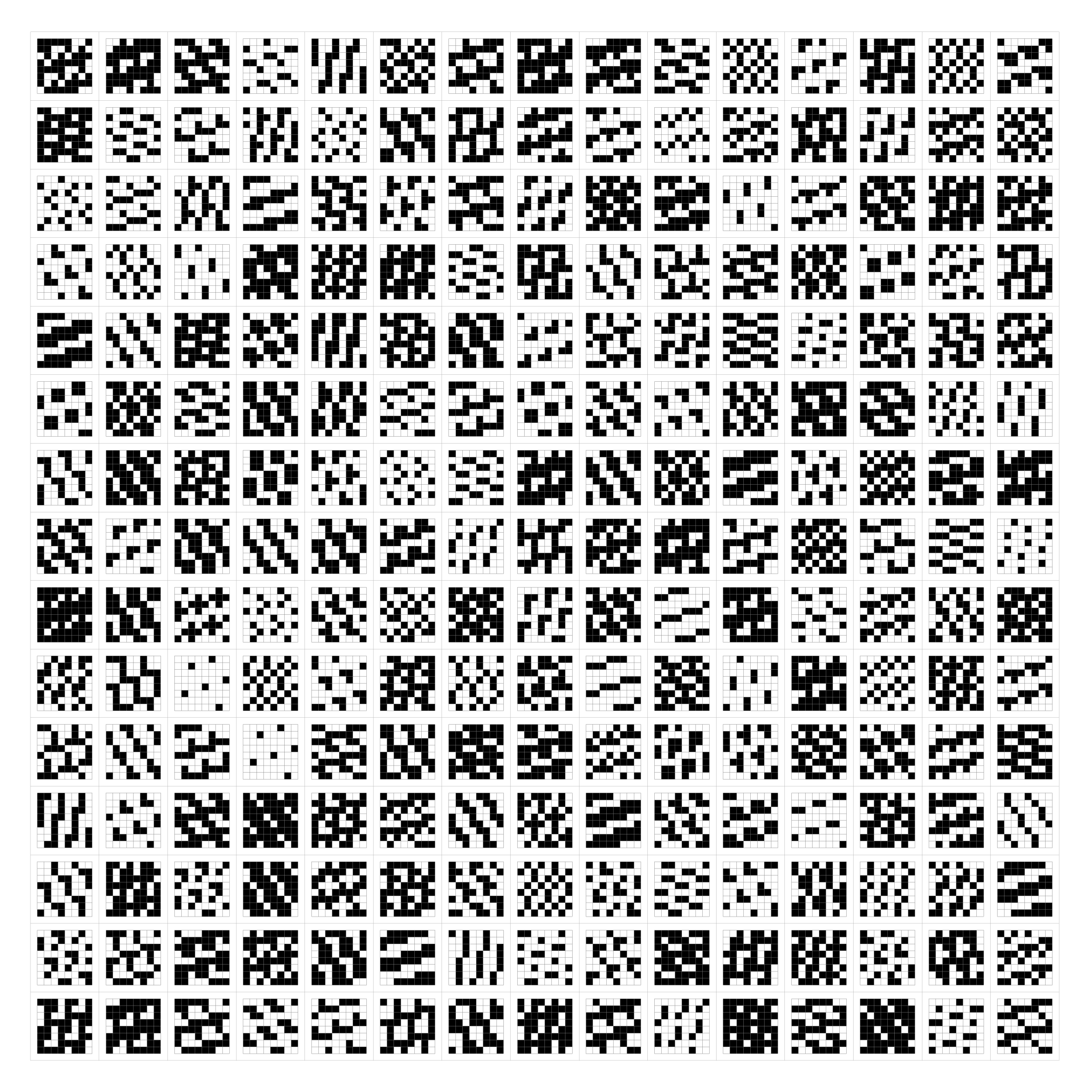
Weaveology starts as an open research, as it could lead in very different directions depending on the specific investigated aspects, the chosen materials, the used machines and facilities and the research opportunities. As an independent research group, we are open to collaborations and looking for research funding opportunities. We are also available for mentoring workshops and seminars in both academic and non-academic environments.
For info:
instagram - @maude_guirault
mail - maudeguirault@gmail.com
instagram @arch.a.graziano
mail - arch.a.graziano@gmail.com
#gh3d #informedwovenmatter #textiles #weaving #patterns #computationaldesign